
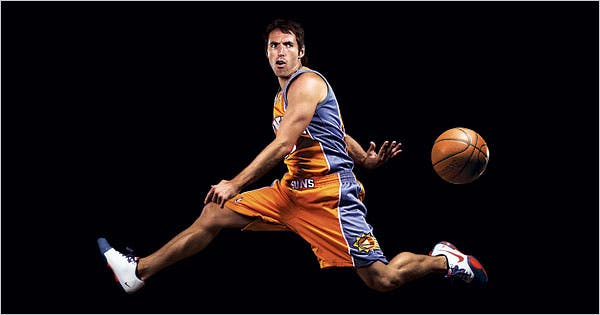

Basketball has no shortage of slang terms that seem unrelated to the sport—just like baseball’s “can of corn” or football’s “carry the rock.” Fans and players use these phrases casually, but for newcomers, they can sound completely random.
One of the most common examples in basketball is the word “dime”. If you’ve spent any time watching the NBA, playing pickup, or listening to highlights, you’ve probably heard someone say a player “dropped a dime.”
So what does that actually mean—and where did it come from?
What Does a Dime Mean in Basketball?
In basketball, a dime is slang for an assist—a pass that directly leads to a made basket.
If a player finishes a game with 10 assists, someone might say they had “10 dimes.”
But the term isn’t just about the stat itself. Calling something a dime usually implies the pass was:
-
perfectly timed
-
precise
-
impressive or difficult
A routine swing pass rarely gets called a dime. A no-look bounce pass through traffic? That’s a dime.
Where the Term “Dime” Came From
The slang dates back to the era of payphones, long before cell phones existed.
How the phrase developed
-
A phone call from a payphone cost 10 cents—a dime
-
If someone needed to make a call but didn’t have change, they would ask someone to “drop a dime”
-
In other words, a person was assisting them by giving them a dime
Basketball players adopted the phrase because the meaning fit perfectly—helping someone complete something by giving them what they need.
Even though payphones are nearly extinct today, the expression stuck and became part of basketball vocabulary at every level.
What Is an Assist in Basketball? (Quick Breakdown)
While “dime” is slang, assist is an official stat used across many sports, including hockey, soccer, lacrosse, and volleyball.
How an assist works in basketball
An assist is credited when:
-
a player passes the ball to a teammate
-
and that teammate scores a field goal immediately afterward
A few important notes:
✅ The scorer can dribble before shooting—the assist still counts
✅ The pass must directly set up the basket
❌ No assist is awarded if the player is fouled and scores only on free throws
❌ The original passer doesn’t get the assist if another pass happens before the shot
In simple terms:
Player A passes → Player B scores → Player A gets the assist
What Does “Dropping a Dime” Mean?
“Dropping a dime” takes the slang one step further.
While dime can refer to any assist, dropping a dime usually describes an exceptional one.
Examples include:
-
a no-look pass
-
a pinpoint alley-oop
-
a behind-the-back feed
-
threading the ball through a tiny window
-
a perfect bounce pass in transition
Broadcasters and fans use the phrase to highlight creativity and skill—not just the stat.
A simple chest pass leading to a layup?
Probably not a dime.
A slick, perfectly placed pass that freezes the defense?
That’s dropping a dime.
What Does “Throwing a Dime” Mean? (Other Sports Use)
The phrase has expanded beyond basketball, especially into football and baseball.
Football
“Throwing a dime” refers to a perfect, accurate pass, often deep downfield.
The NFL even defines it as:
-
a throw that travels 30+ yards in the air
-
and fits into a very tight window (around one yard)
Quarterbacks known for throwing dimes include:
-
Patrick Mahomes
-
Aaron Rodgers
-
Matthew Stafford
Baseball
It’s less common, but you may hear:
-
a catcher making a perfect throw to second
-
an outfielder throwing a runner out at home
In all cases, the meaning is the same—precision and accuracy.
Final Thoughts
A dime in basketball simply means an assist, but the slang has a deeper—and pretty entertaining—origin rooted in payphones and asking someone for help to “drop a dime.”
Today, the term is used to describe:
-
assists
-
perfect passes
-
elite playmaking
-
and moments of creativity that make basketball fun to watch
So the next time someone drops a beautiful pass for an easy bucket, you’ll know exactly why everyone calls it a dime—even if most people today have never used a payphone.