
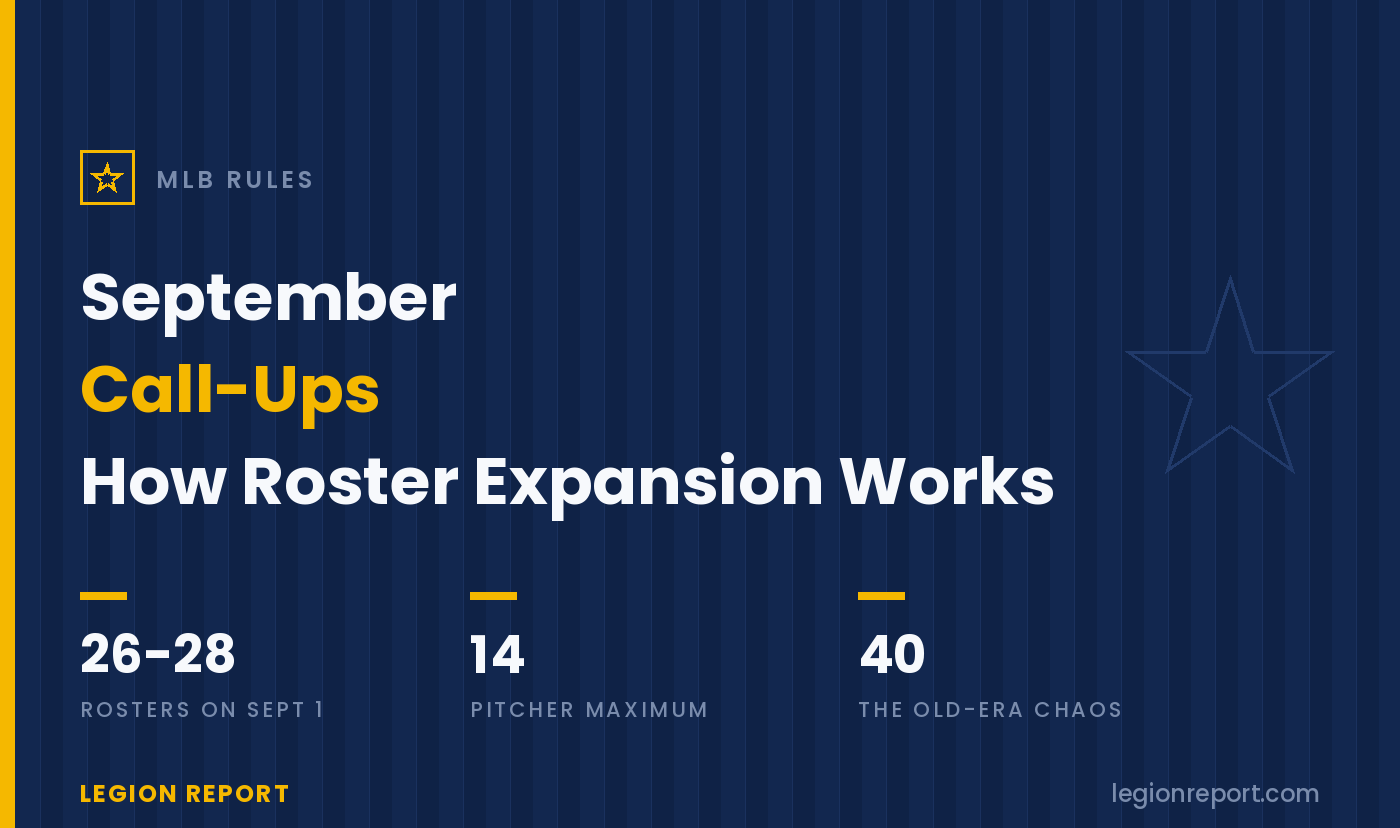

Every September 1, MLB rosters grow — but not the way older fans remember. The modern rule: teams expand from 26 to 28 players (with a cap of 14 pitchers), a tightly rationed version of the old September free-for-all, when clubs could summon their entire 40-man roster and playoff races were decided against opponents fielding half a farm system. Here’s how September call-ups work now, who gets the call, the paycheck and service-time stakes, and why the sport killed its strangest tradition.
The chart below covers the modern rule, who comes up, and the old chaos it replaced. Take a look, then we’ll break it all down.
Two Extra Chairs at Baseball’s Strangest Party
September call-ups survive as one of baseball’s best traditions precisely because the sport finally disciplined them. The old version was genuinely bizarre: for a century, the game’s decisive month was played under expanded-roster anarchy, where one contender might dress 33 players and its rival 38, where a crucial extra-inning game could burn through eight relievers a side, and where a pennant could swing on which farm system emptied harder. The 2020 reform kept what fans loved — the September 1 ritual, the prospect debut, the cup of coffee that changes a life — and capped what they didn’t, at 28 players and 14 pitchers, making the stretch run structurally the same game as June. What the rule change couldn’t simplify is the chess underneath: every call-up requires a 40-man spot (so late August is quietly a roster-crunch bloodbath), every debut starts a service clock a front office may prefer to start in April, the pro-rated minimum means a month in the show pays a minor leaguer more than his whole summer did, and the August 31 playoff-eligibility line makes the two extra chairs strategic rather than sentimental. Watch the transactions wire on September 1 accordingly: the names are small, and the calculations behind them never are.
Final Word
September call-ups, explained: rosters expand from 26 to 28 (max 14 pitchers) on September 1, drawing from the 40-man roster, with call-ups earning the pro-rated big-league minimum and starting their service clocks — the disciplined 2020-era replacement for the old 40-man September chaos that distorted pennant races for a century. The tradition’s heart survived intact: September is still when tomorrow’s stars get their first taste, two carefully rationed chairs at a time.
The roster machinery behind the call is in the 40-man vs. 26-man roster, explained, the paycheck that starts is in the MLB minimum salary, and the pay it replaces is in minor league baseball salaries.