
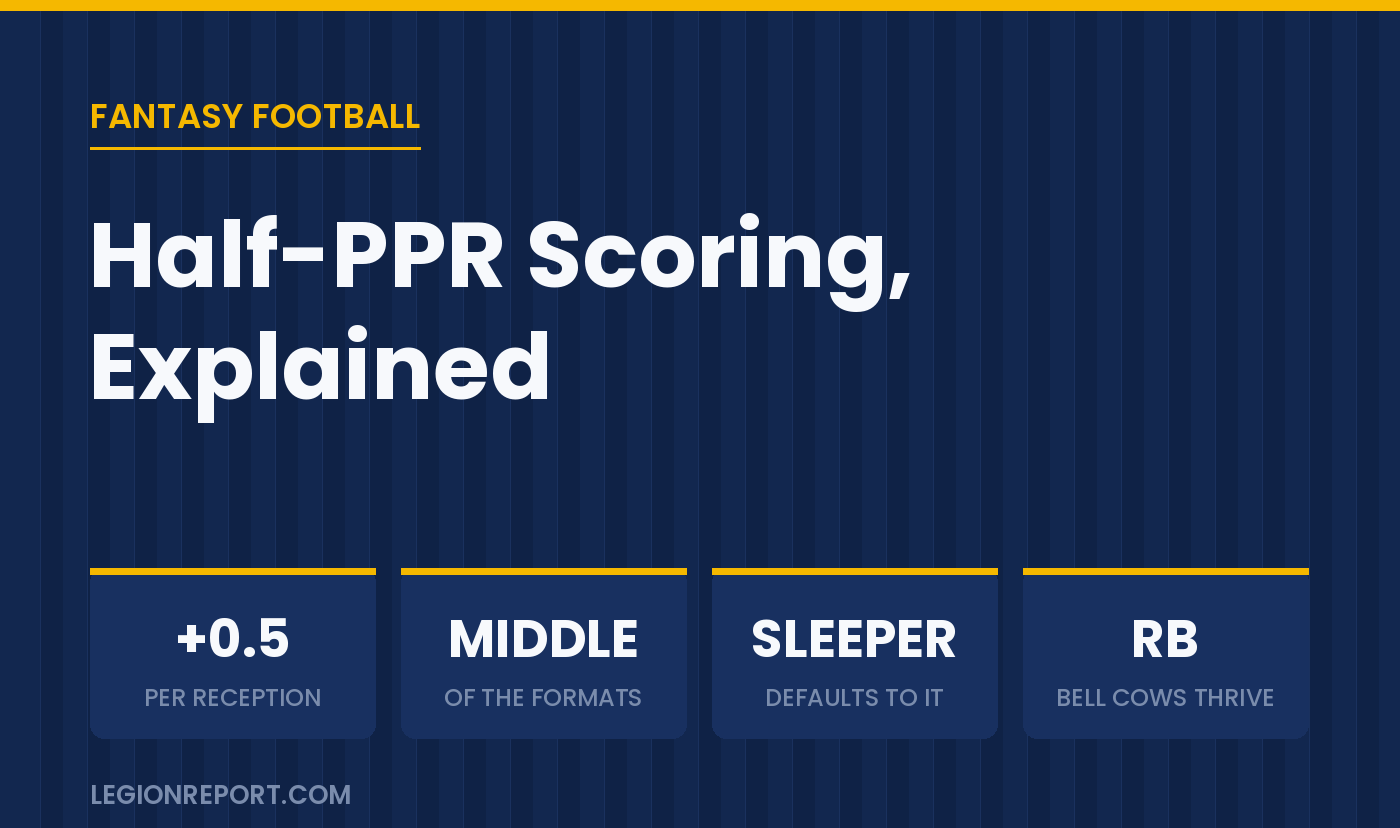

Half-PPR is fantasy football’s compromise format — half a point per reception instead of the full point — and it has quietly become the sharpest leagues’ scoring of choice. It softens standard scoring’s touchdown-lottery problem without letting empty catches dominate the way full PPR can, landing player values almost exactly between the two extremes. Sleeper defaults to it, high-stakes formats like the FFPC’s main events use it (with a tight-end premium), and most industry rankings now publish a half-PPR column.
Mechanically, everything else matches the standard scoring you know: one point per ten rushing or receiving yards, six for touchdowns, four for passing scores. The only change is that a reception is worth 0.5 — which means a 5-catch, 50-yard game is 10 points instead of 5 (standard) or 15 (full PPR). Small change, big redistribution.
The chart below covers the scoring, who gains and loses relative to each format, and how to adjust your draft. Take a look, then we’ll get into why the middle ground wins arguments.
Why the Middle Ground Keeps Winning
Scoring debates are really arguments about what fantasy should reward. Standard rewards touchdowns and yardage — outcomes with heavy week-to-week randomness. Full PPR rewards involvement, but at the cost of paying full price for a two-yard hitch. Half-PPR splits the difference: receptions matter enough to reward the players who actually drive offenses, not so much that volume without production wins leagues. That’s why sharp formats gravitated to it — it produces the widest spread of viable draft strategies, keeps both bell-cow backs and target hogs relevant, and generates the fewest ‘that shouldn’t count’ moments on Sunday.
The Bottom Line
Half-PPR adds half a point per reception to otherwise-standard scoring, landing every catch-dependent player’s value between the standard and full-PPR extremes and restoring balance between running backs and receivers at the top of drafts. Draft from half-PPR rankings, prize three-down backs, and know your platform’s default before you prep. For the two formats it sits between, see our guides to full PPR scoring and standard scoring, and for the market that prices it all, ADP explained.