
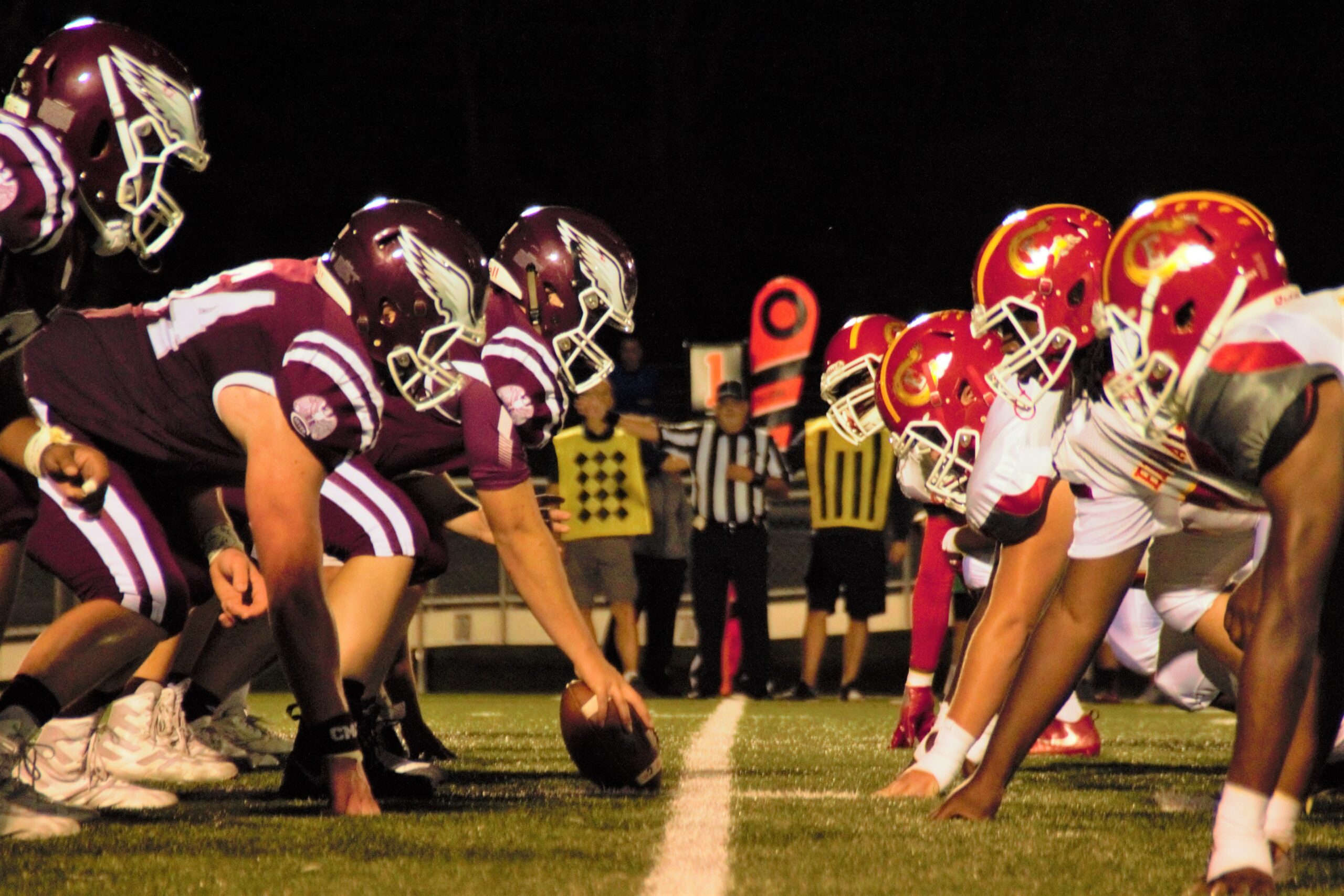

College football isn’t just decided on the field—it’s won and lost on the recruiting trail. Every championship run, every breakout season, and every Heisman moment usually begins years earlier with a handshake, a phone call, or a commitment video that goes viral.
But for casual fans, the recruiting world can feel like a mystery. What exactly does a five-star ranking mean? How do high school players get noticed? And how has NIL money and the transfer portal changed everything?
Here’s a clear look inside how college football recruiting really works.
Contents
The Recruiting Calendar: A Year-Round Chess Match
Recruiting doesn’t stop. College coaches work year-round to identify, evaluate, and build relationships with high school players.
The recruiting calendar is set by the NCAA and includes specific periods:
-
Contact Period: Coaches can visit schools, attend games, and meet athletes and families in person.
-
Evaluation Period: Coaches watch players at games or camps but can’t have in-person contact.
-
Quiet Period: Coaches can talk to recruits only on campus visits.
-
Dead Period: No in-person contact allowed—only calls, texts, and digital communication.
Top programs like Alabama, Georgia, and Ohio State have entire departments dedicated to managing these cycles, tracking thousands of recruits at once.
How College Football Recruiting Works: The Complete 2025 Guide
View this post on Instagram
Star Ratings and Recruiting Rankings Explained
You’ve probably seen players labeled as “five-star” or “three-star recruits.” These ratings, created by recruiting services like 247Sports, Rivals, and On3, are a shorthand for potential.
-
⭐️⭐️⭐️⭐️⭐️ (Five-Star): Projected future NFL-level talent—only about 30 players nationally earn this label.
-
⭐️⭐️⭐️⭐️ (Four-Star): Strong Power Five prospects—roughly the top 300–350 players.
-
⭐️⭐️⭐️ (Three-Star): Solid Division I players who may need more development time.
-
⭐️⭐️ (Two-Star and below): Often small-school or late-blooming prospects.
These rankings aren’t perfect—many Heisman winners started as three-stars—but they influence public perception and even how fans judge a program’s success on National Signing Day.
How Players Get Noticed
Talent is the foundation, but visibility matters. Recruits get noticed through:
-
High School Game Film: Coaches watch highlight reels shared via Hudl or YouTube.
-
Camps and Combines: Nike’s “The Opening,” Under Armour Camps, and college-specific camps allow players to showcase athletic metrics (40-yard dash, shuttle, vertical, etc.).
-
Social Media: X (Twitter) and Instagram have become recruiting hubs. Players post workout clips, offers, and commitment announcements to build exposure.
-
High School Coaches: Relationships still matter. Many college coaches trust local coaches to recommend overlooked players.
The Commitment Process
Once a program offers a scholarship, recruits often take official visits—paid trips to campus where they meet coaches, tour facilities, and experience game day.
After visiting, players can verbally commit. It’s non-binding, but it signals intent. The process culminates on National Signing Day, when players sign a National Letter of Intent (NLI), officially joining a school’s recruiting class.
Recruiting rankings often hinge on how many four- and five-star players sign with a team. That’s why you’ll see headlines like “Georgia Lands No. 1 Recruiting Class for 2025”—it’s the college football version of draft day.
The NIL Era: Money Meets Recruiting
In 2021, college athletes gained the right to profit from their Name, Image, and Likeness (NIL). That single rule change reshaped recruiting overnight.
Now, athletes can sign sponsorships, social media deals, and brand partnerships—even before playing a down in college. Some high-profile recruits have reportedly earned six-figure NIL packages, making the recruiting landscape more competitive than ever.
Schools with strong alumni networks or donor-backed NIL collectives often have an edge. It’s not technically “pay-for-play,” but NIL has blurred that line and made recruiting a financial arms race.
The Transfer Portal: A New Recruiting Frontier
The transfer portal—essentially a free agency system for college athletes—has added another layer to modern recruiting.
Coaches now recruit not just high school players, but also college players looking for a new opportunity. Some programs, like USC under Lincoln Riley, have rebuilt entire rosters through the portal.
In many ways, it’s shifted focus from long-term development to immediate impact. Coaches must balance traditional recruiting with short-term roster fixes—making roster management more complex than ever before.
Why Recruiting Matters More Than Ever
Recruiting rankings aren’t just for bragging rights—they’re predictive. Since 2000, almost every national champion has finished with a Top 10 recruiting class in the previous three years.
Recruiting drives everything: roster depth, scheme flexibility, even coaching job security. The programs that recruit well—Georgia, Alabama, Ohio State, LSU—are the same ones lifting trophies in January.
As one SEC coach put it:
“You can be the best coach in the world, but if you don’t have the players, you’re not winning in this league.”
The Future of Recruiting
With NIL, analytics, and digital scouting evolving fast, recruiting is becoming more data-driven than ever.
Artificial intelligence tools are helping identify prospects earlier. Social platforms amplify exposure. And NIL collectives are reshaping what “commitment” even means.
But at its heart, recruiting is still personal. It’s about relationships, trust, and the dream of playing under the Saturday lights.
That’s what makes college football so uniquely American—the belief that the next superstar could be a kid from any town, waiting for that one call.