
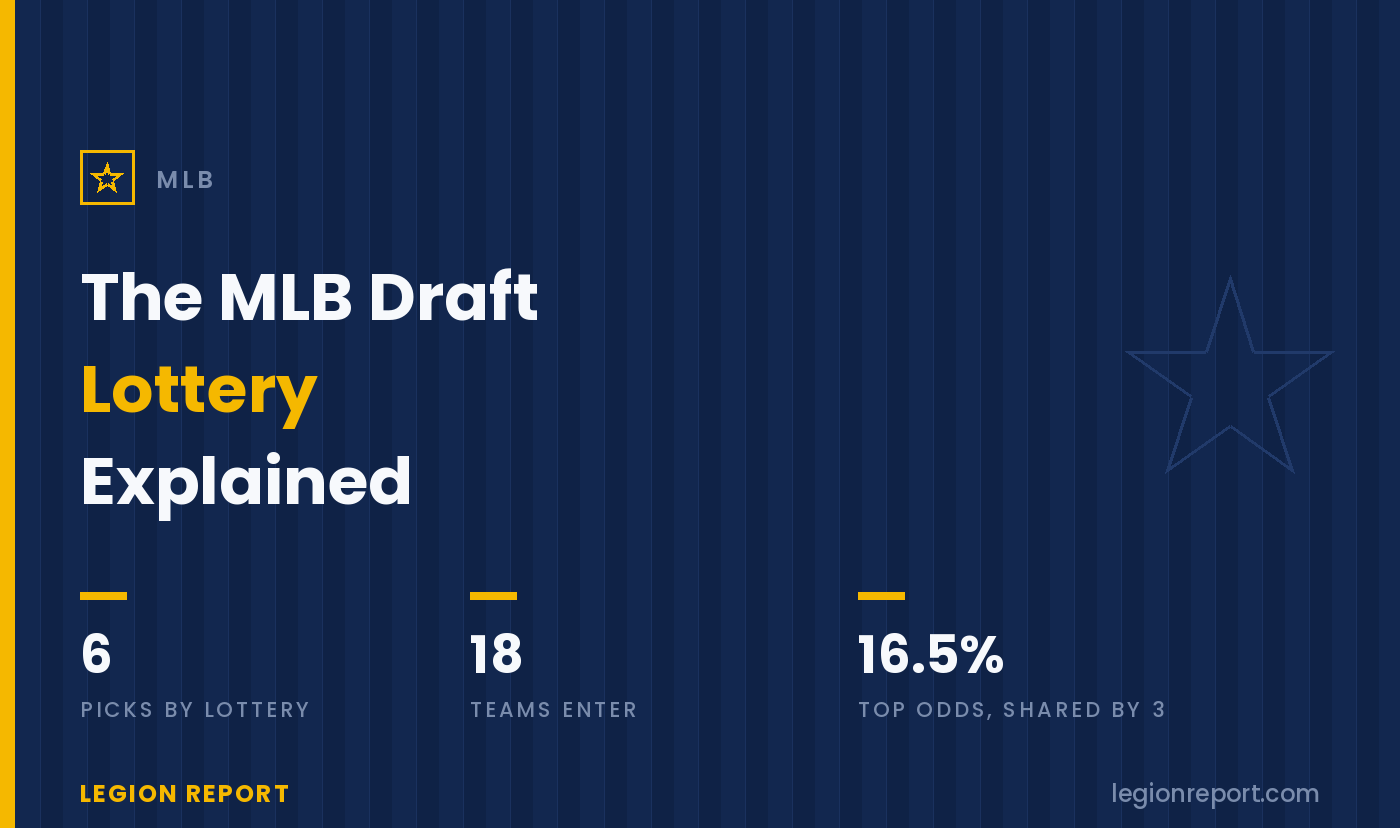

When the White Sox make the first pick of the MLB Draft in Philadelphia tomorrow night, they’ll be cashing a ticket they won seven months ago, on a stage in the Winter Meetings ballroom, via ping-pong balls. The MLB Draft Lottery is baseball’s newest anti-tanking weapon, just four drafts old, and it works nothing like the NBA version most fans know: eighteen teams, six lottery picks, odds that punish repeat losers, and rules that have already yanked top picks away from teams that finished last.
Here’s exactly how the lottery works, why it exists, and how it built tomorrow’s draft order.
The chart below covers the lottery mechanics, the anti-tanking penalties, the short history, and tomorrow’s stakes. Take a look, then we’ll break it all down.
Why Baseball Finally Adopted a Lottery
For over half a century, MLB’s draft order was pure reverse standings: lose the most, pick first, an arrangement that by the late 2010s had produced an open tanking meta, with multiple franchises stripping rosters for years to stockpile top picks the way Houston and the Cubs famously had. The players’ union hated it, tanking suppresses veteran salaries and turns seasons into liquidation sales, and made the lottery a priority in the 2022 CBA fight. The design they landed on is deliberately harsher than the NBA model it superficially resembles: all 18 non-playoff teams enter, only the top six picks are drawn, and the crucial twist is at the top of the odds table, where the three worst teams share an identical ~16.5% chance, meaning there is literally zero draft incentive to finish 30th instead of 28th. The deterrent with real teeth, though, is the eligibility clock: revenue-sharing recipients can’t receive lottery picks in three consecutive drafts, everyone else can’t in two straight, and teams over the limit get shoved down the order regardless of record, a penalty that has already relocated bottom-three teams out of the top picks. Baseball’s message to would-be tankers is structural now: the bottom pays out on a randomized schedule, with a cap.
From Ping-Pong Balls to Tomorrow’s Podium
The system’s short history has been kind to it. The inaugural 2023 lottery handed the No. 1 pick to Pittsburgh, who converted it into Paul Skenes, the fastest-moving ace of his generation and the best possible advertisement for December ballroom drama; subsequent lotteries have produced genuine upsets, teams jumping from mid-pack odds into the top three, giving the Winter Meetings a made-for-TV set piece baseball never had. Tomorrow night the machinery completes its annual cycle in Philadelphia: the White Sox, December’s winners, open the draft with consensus No. 1 prospect Ethan Cholowsky expected to go first, rounds one through three play out as All-Star week’s Saturday centerpiece, and rounds four through twenty burn through Sunday. Underneath every pick runs the draft’s other defining system, slot values and bonus pools, where the real strategy lives (teams routinely cut below-slot deals early to blow the savings on a tough-sign prep star later), and which is why the lottery only decides who picks, never what the pick is worth. That part, as ever in baseball, is math.
Final Word
The MLB Draft Lottery, explained: born in the 2022 CBA as an anti-tanking weapon, it enters all 18 non-playoff teams for the top six picks each December at the Winter Meetings, gives the three worst teams identical ~16.5% odds so there’s nothing to gain from being historically bad, and bars repeat lottery appearances (three straight for revenue-sharing recipients, two for everyone else) with real demotions for violators. Its first winner drafted Paul Skenes; its latest, the White Sox, pick first in Philadelphia tomorrow night, where the lottery’s December luck finally becomes a name on a card.
The full 20-round machine is explained in the MLB Draft, explained, the sport’s other July deadline is covered in the MLB trade deadline, explained, and what draftees are really chasing is in the odds of making MLB.