
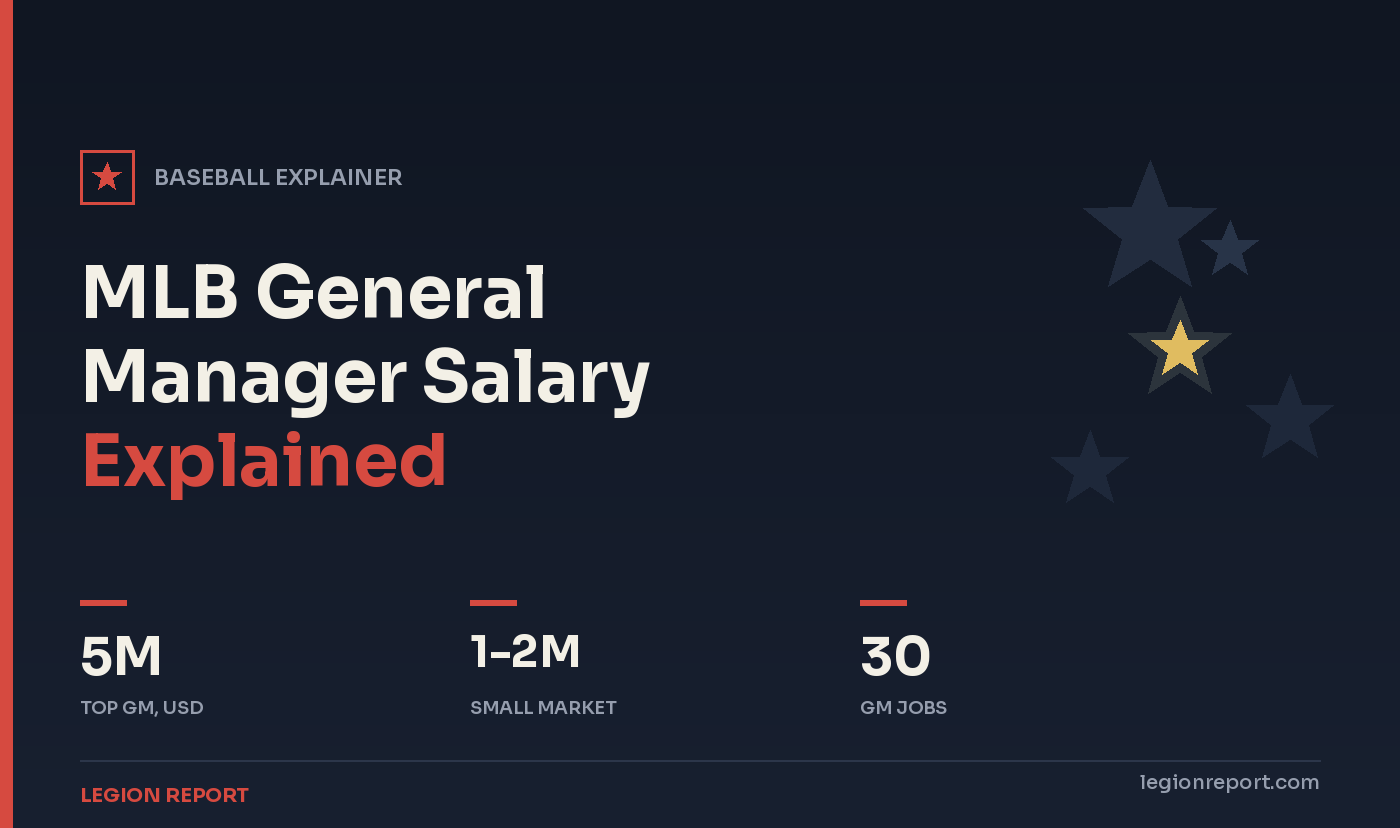

The general manager is one of the most important people in any Major League Baseball organization. The GM builds the roster, makes the trades, hires the manager, oversees scouting and player development, and ultimately answers to ownership for whether the team wins or loses. It is one of just 30 such jobs in the sport, and among the most coveted executive roles in all of professional sports. So how much do these decision-makers actually earn?
The honest answer is that we do not know exact figures, because MLB teams keep front-office salaries private. But based on reporting and known contracts, GM pay generally ranges from around $1 million for newer or small-market executives up to $5 million or more for the highest-paid. The Yankees’ Brian Cashman, the longest-tenured GM in the game, is widely reported as the highest-paid at roughly $5 million a year.
The chart below breaks down estimated GM pay by tier, how it compares to other baseball roles, and the factors that drive it. Take a look, then we’ll get into the details.
Why exact GM salaries are a mystery
Unlike player contracts, which are public and meticulously tracked, the salaries of MLB front-office executives are kept confidential by teams. There is no league-mandated disclosure for general managers, so every figure you see is an estimate pieced together from leaked contract terms, reporting, and the occasional public confirmation. This is why you will see ranges rather than precise numbers, and why the same GM might be reported at slightly different figures by different outlets.
What is clear is the rough shape of the market. The best estimates place most GM salaries between about $1 million and $5 million per year, with the figure depending heavily on the size of the market, the GM’s experience and track record, and how much the team’s ownership is willing to invest in winning. Large-market clubs with deep pockets, like the Yankees, Dodgers, and Mets, pay at the high end, while smaller-market teams pay considerably less.
The highest-paid GM in baseball
The name most associated with top GM pay is Brian Cashman of the New York Yankees. The longest-tenured general manager in the sport, Cashman has held the role since 1998 and is widely reported as baseball’s highest-paid GM at around $5 million per year. His pay reflects both his market (the game’s marquee franchise) and his track record, which includes four World Series titles and the best winning percentage of any GM with at least a decade of experience since 1950.
Cashman’s salary history is a useful window into how GM pay has grown. He started in 1998 on a one-year deal worth just $300,000, climbed to around $1.3 million by the mid-2000s, and then jumped to roughly $5 million with his 2017 contract, a level he has maintained since. That trajectory mirrors the broader rise in front-office compensation as the sport’s revenues have soared.
What drives the differences
Several factors explain why one GM might earn five times another. Market size is the biggest: big-market teams generate far more revenue and can afford to pay premium salaries to attract and retain top executive talent. Experience and reputation matter too, a proven GM with championships on his resume commands far more than a first-time hire. And ownership’s appetite for winning plays a role, as clubs willing to spend on the roster are often willing to spend on the executive building it.
Tenure in the role is typically short, averaging just four to six years, with turnover accelerating after losing seasons. That insecurity is part of the job: a GM can be dismissed for failing to deliver wins, which makes the high salaries a reflection of both the role’s importance and its risk. Unlike players, GMs generally do not have performance incentives written into their deals.
The rise of the President of Baseball Operations
One important wrinkle in modern front offices is that the “general manager” is no longer always the top decision-maker. Many clubs have created a President of Baseball Operations role that sits above the GM, holding final authority over personnel decisions. At those teams, the GM runs day-to-day operations but reports to the president, who typically earns more. Examples include the Cardinals, Twins, and Guardians, where the GM answers to a higher baseball-operations executive.
This two-tier structure means the highest-paid baseball-operations executives at some clubs are actually presidents, not GMs, and their pay can climb even higher than the $5 million GM ceiling. It reflects how complex and specialized running a modern baseball team has become, with analytics, scouting, player development, and contract management all demanding executive attention.
Final Word
MLB general managers earn an estimated $1 million to $5 million or more per year, with the Yankees’ Brian Cashman widely reported as the highest paid at roughly $5 million. The exact figures stay private, since teams do not disclose front-office salaries, but the range is shaped by market size, experience, and ownership’s willingness to invest. Even at the top, a GM earns far less than star players or the best-paid managers.
It is one of the most demanding and least secure jobs in sports: 30 positions, an average tenure of just a few years, and constant pressure to win. For that, the people building baseball’s rosters are paid handsomely, even if we never see the exact numbers. For more on baseball’s biggest paydays, see our list of MLB All-Star Game winners by year.