

It looks like the best seat in the house. You are courtside for every game, a few feet from the biggest stars in basketball, and you are technically on the payroll of an NBA team. So it is no surprise that one of the most searched questions about life around the league is a simple one: how much does an NBA waterboy actually get paid?
You have probably seen the figure floating around, the one that claims waterboys pull in $58,000 a year or even six figures. The real answer is more complicated, and a lot more interesting, because the number everyone repeats may not be what it seems.
The chart below breaks down what these roles actually pay, the perks that come with the job, and where that famous salary figure really comes from. Take a look, then we’ll separate the myth from the reality.
First, the Job Is Not Really “Waterboy”
The official title for these roles is team attendant, and “waterboy” or “ball boy” is a loose blanket term for a whole crew. As ESPN documented in a 2025 feature on the Oklahoma City Thunder’s staff, these crews are made up of adults of all genders, not kids, and they split into specific roles: the towel crew, team attendants who work both benches, and equipment-room assistants. Calling them waterboys undersells how much they actually do.
What They Actually Earn
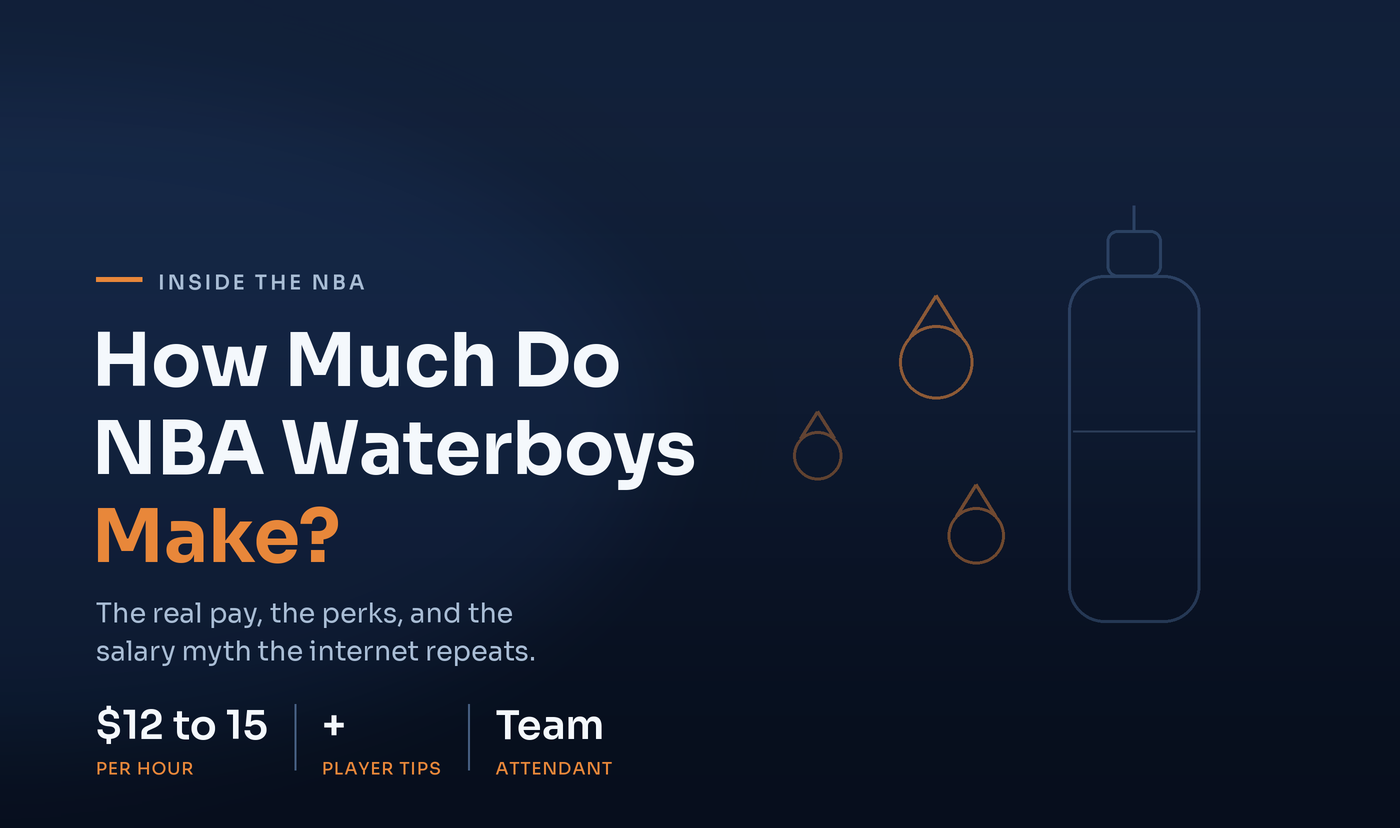
Here is where the popular story falls apart. According to ESPN’s reporting, towel crew members typically make about $15 an hour and team attendants about $12 an hour.
The catch is tips: team attendants often receive sizable tips from players, so the real take-home ends up notably higher than the hourly rate suggests. A widely shared figure puts NBA ball boys at roughly $36,000 a year. Beginners, often recruited from local schools, may earn around $100 per game, and some start as unpaid volunteers or interns before working their way onto the paid crew.
Where the $58,000 Myth Comes From
So what about that $53,000 to $58,000 figure, or the claim that some teams pay $100,000? It is repeated on dozens of websites, but they all trace back to the same original source, with no team, contract, or pay stub ever cited to verify it.
The number has been copied so many times that it now looks like established fact, but no primary source confirms it. The honest takeaway is that the viral figure is likely inflated, and the grounded reporting from ESPN points to hourly pay plus tips rather than a high fixed salary. As for the wildly varying salary-site estimates (some showing anywhere from $36,000 to over $100,000), those are automated guesses built from a tiny number of submissions and are not reliable for a role like this.
The Perks Are a Big Part of the Job
The paycheck is only part of the appeal. Team attendants commonly receive free game tickets, team merchandise and gear, meals on game days, and player tips for handling personal requests. Full-time, in-season roles can come with benefits like health insurance.
For a lot of people in these jobs, the access and the foot in the door of a pro sports organization are worth as much as the wage itself, since many attendants use the role to work their way up into other team positions.
What the Job Actually Involves
It is real work. A team attendant typically arrives about three hours before tip-off to help set up the locker room and unload team luggage, then runs errands, makes ice packs, and rebounds for players during shootaround.
Once the game starts, they are on the sidelines handing out towels, water, and uniforms, and keeping everything moving. During the season it is essentially a full-time job, and pay drops or disappears in the offseason and preseason when there are no games.
The Bottom Line
The popular claim that NBA waterboys make $58,000 to $100,000 a year is not backed by any verifiable source and is probably too high. The most credible reporting points to team attendants earning around $12 to $15 an hour, boosted meaningfully by player tips, plus valuable perks like free tickets, gear, meals, and sometimes health insurance. It is not the secret six-figure job the internet makes it out to be, but for someone who loves basketball and wants a way into the industry, a courtside seat and a paycheck is not a bad place to start.