

The pristine emerald grass, the perfectly manicured infield dirt, the crisp chalk lines: a Major League Baseball field is a work of art, and the people who create it are the groundskeepers. It is one of the most skilled and least visible jobs in the sport, demanding expertise in turfgrass science, agronomy, and split-second weather management. So how much do the people who keep the field game-ready actually earn?
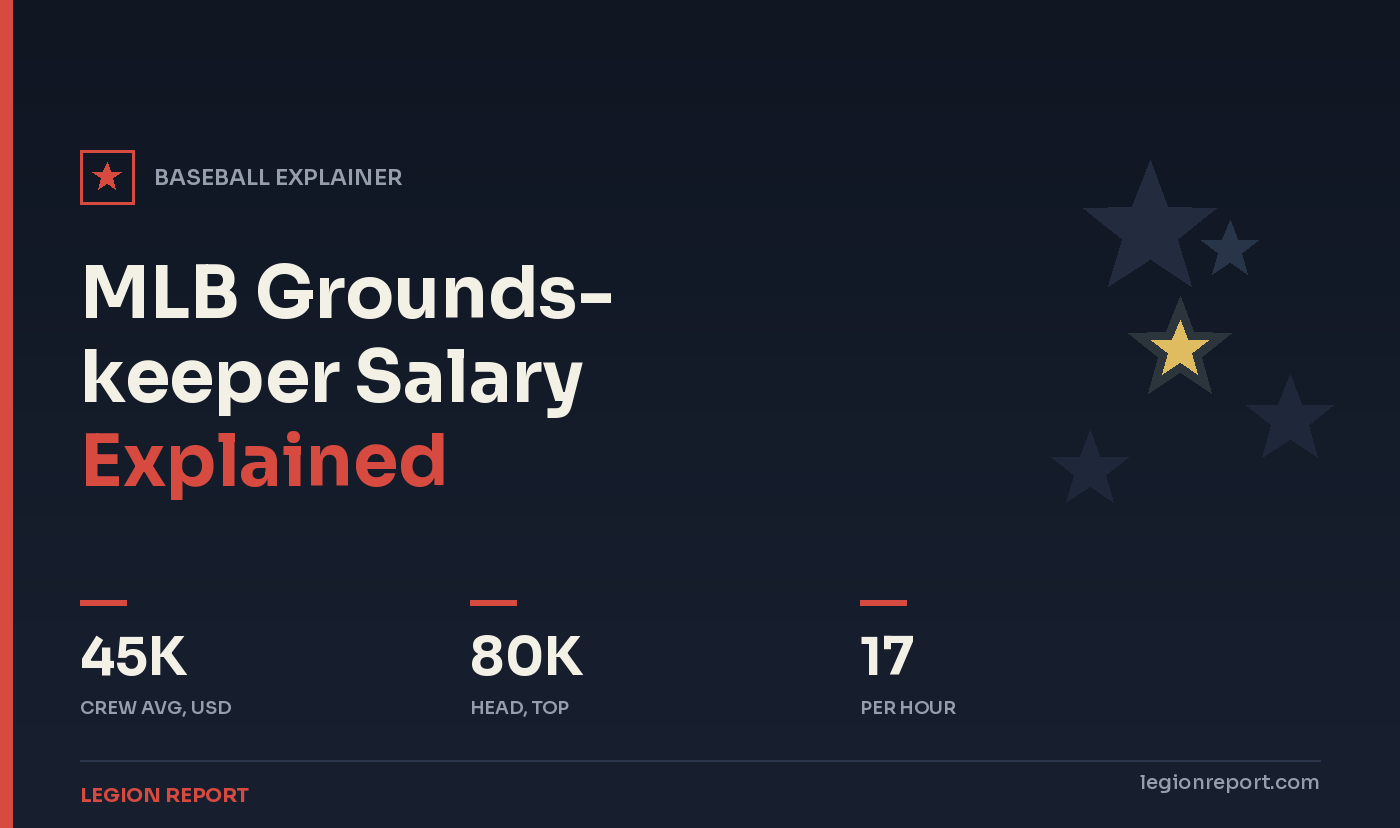
The answer spans a wide range depending on role and experience. A member of the grounds crew typically earns somewhere around $30,000 to $60,000 a year, averaging roughly $17 to $23 per hour, while a head groundskeeper, who runs the entire operation, can earn $58,000 to $80,000 or more. As with most behind-the-scenes sports jobs, teams do not publicly disclose these salaries, so the figures are estimates from job-market data and reporting.
The chart below breaks down groundskeeper pay by role, from seasonal crew member to head groundskeeper, plus how the minor leagues compare. Take a look, then we’ll get into the details.
What a groundskeeper earns by role
Groundskeeping at the major-league level is a team operation, and pay varies sharply by role. At the top sits the head groundskeeper, the person responsible for the entire field and crew, who earns an estimated $58,000 to $80,000 or more, with figures for clubs like the Phillies reported around $69,000. Below that, an assistant groundskeeper might earn $45,000 to $60,000, a regular grounds crew member $35,000 to $48,000, and seasonal or entry-level workers closer to $25,000 to $35,000.
On an hourly basis, most grounds crew members earn somewhere between $17 and $23 per hour. Because teams keep this information private, every figure here is an estimate drawn from job listings and salary-data sites rather than official disclosure. Still, the consistent picture across sources is of a skilled, middle-income job, more than entry-level landscaping but well below the salaries of the players whose field they maintain.
How the minor leagues compare
Interestingly, the gap between major-league and minor-league groundskeeping pay is smaller than you might expect, at least at the crew level. A minor-league groundskeeper typically earns around $35,000 to $48,000, which overlaps almost entirely with the typical MLB crew range. The bigger differences come with seniority and market: a head groundskeeper at a major-market MLB club, like the Dodgers or Yankees, can push toward the $70,000 to $80,000 range, well above what a minor-league field manager would make.
This reflects how the job scales. The fundamental skills, turf management, infield clay, irrigation, are the same at every level, so crew pay is relatively flat. What commands a premium is the responsibility of running a high-profile MLB field, where the playing surface is scrutinized nightly on national television and must meet strict league standards.
The skills behind the salary
Groundskeeping is far more technical than it looks from the stands. The job typically requires a background in turfgrass management, agronomy, or horticulture, often including a bachelor’s degree in one of those fields for the senior roles. Many professionals hold certification from the Sports Turf Managers Association (STMA), and listings for assistant and head roles routinely require multiple years of professional field-management experience.
The work itself is demanding and weather-dependent. Crews manage mowing, edging, irrigation, infield skin and mound maintenance, and the all-important tarp operation during rain delays, often making real-time decisions as forecasts change. The season runs heaviest from April through October, with long hours on game days. It is physical, skilled, high-pressure work, and the pay reflects a specialized trade rather than general labor.
A craft with its own hall of fame
One sign of how seriously baseball takes its fields: there is actually an MLB Groundskeeper Hall of Fame, honoring the legends of the profession. Iconic head groundskeepers have become respected figures in the sport, their work admired by players and fans alike, and the best of them are considered artists of their craft. A beautifully prepared field is a point of pride for an organization, and the head groundskeeper is its author.
That recognition does not always translate into player-level money, but it does speak to the respect the role commands within the game. For those passionate about turf and baseball, it is a career that combines science, artistry, and a daily connection to the sport, even if the paycheck is modest by professional-sports standards.
Final Word
MLB groundskeepers earn an estimated $35,000 to $48,000 as crew members and $58,000 to $80,000 or more as head groundskeepers, with hourly rates generally in the $17 to $23 range. The exact figures stay private, since teams do not disclose them, but the picture is of a skilled, specialized job that pays a solid middle-income wage, more for the senior roles at big-market clubs.
It is one of the most underappreciated jobs in baseball: technical, weather-dependent, and essential to the game being played at all. The next time you admire a flawless infield or a crisp set of baselines, you will know there is a skilled professional, and a modest but respectable salary, behind it. For more on the people who run a ballclub, see our breakdown of MLB general manager salaries.