
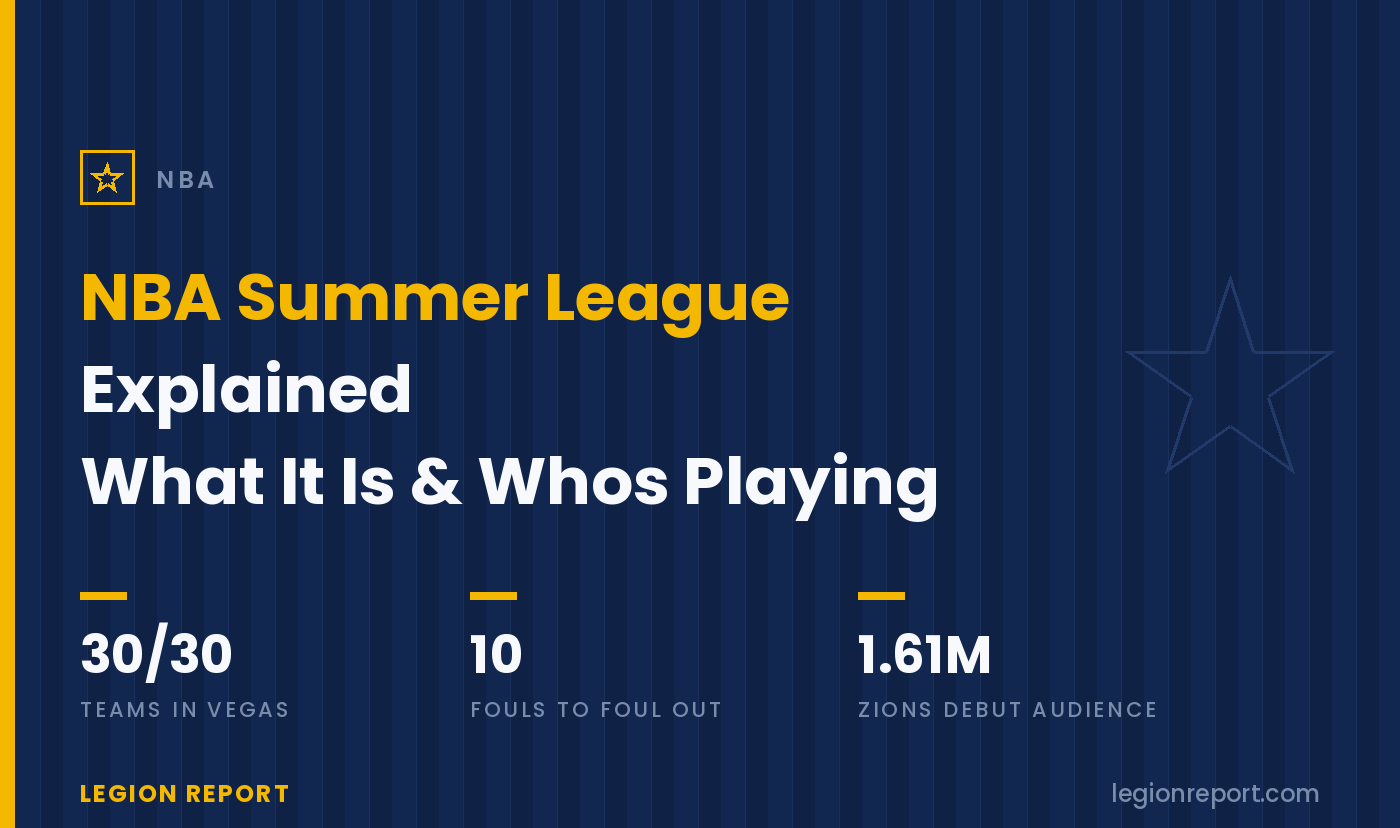

Every July, the NBA reappears two weeks after the Finals in a form that confuses casual fans: Summer League, where the box scores feature one famous rookie, a dozen names you’ve never heard, and none of the stars. What is it, who’s actually playing, and do the games mean anything? Here’s the full explainer — the three-event structure, the rosters, the rule quirks, and why a July exhibition can draw over a million viewers for a single debut.
The chart below covers the format, who plays, and the rules differences. Take a look, then we’ll break it all down.
The NBA’s Strangest, Most Honest Event
Summer League works because it’s three different events wearing one jersey. For the league, it’s July programming that reliably wins the cable night — a Wembanyama or Zion or Cooper Flagg debut draws seven figures for what is, structurally, a scrimmage. For franchises, it’s a laboratory: the first film on draft picks, experimental schemes, and auditions for the two-way and G-League tiers that fill out modern rosters. And for the majority of the players on any given floor, it’s the most honest competition in basketball — undrafted, unsigned, or on the roster bubble, playing 40-minute games under forgiving foul rules for the chance at an Exhibit 10 invite or a two-way deal that changes their lives. That’s why the event’s texture is so distinctive: the lottery pick treats it as a photo shoot and leaves after three games; the guy guarding him treats it as Game 7. Vegas consolidated all of it into one venue-city carnival, complete with a tournament bracket and a championship nobody hangs a banner for, and the result is the NBA’s most watchable meaningless basketball — meaningless for the names you know, and meaning absolutely everything for the ones you don’t yet.
Final Word
NBA Summer League, explained: the league’s July showcase — warm-up events in Salt Lake City and California feeding the all-30-teams Las Vegas tournament — where draft picks debut, two-ways and G-Leaguers audition, and unsigned hopefuls play for their careers under evaluation-friendly rules (40-minute games, 10 fouls to foul out) in games whose stats count for nothing and whose stakes, for half the roster, couldn’t be higher. It airs on ESPN and NBA TV all through mid-July, and the debuts routinely out-draw everything else on summer cable.
Whether the box scores mean anything is covered in do Summer League stats matter?, what these players earn is in NBA Summer League salaries, and the contract half the field is chasing is in the two-way contract, explained.