

It is one of sport’s most enduring debates: is the game called soccer or football? Americans say “soccer,” much of the rest of the world says “football,” and the disagreement can spark surprisingly heated arguments. But here is the twist that surprises many people: the word “soccer” did not come from the United States at all, it was actually invented in England.
The two names trace back to 19th-century Britain, when various forms of football were being formalized. The official name became “association football,” and the slang term “soccer” was coined from it. Over time, Britain and most of the world settled on “football,” while countries that already had their own popular sport called football, like the United States, adopted “soccer” to avoid confusion. Understanding the history settles the debate.
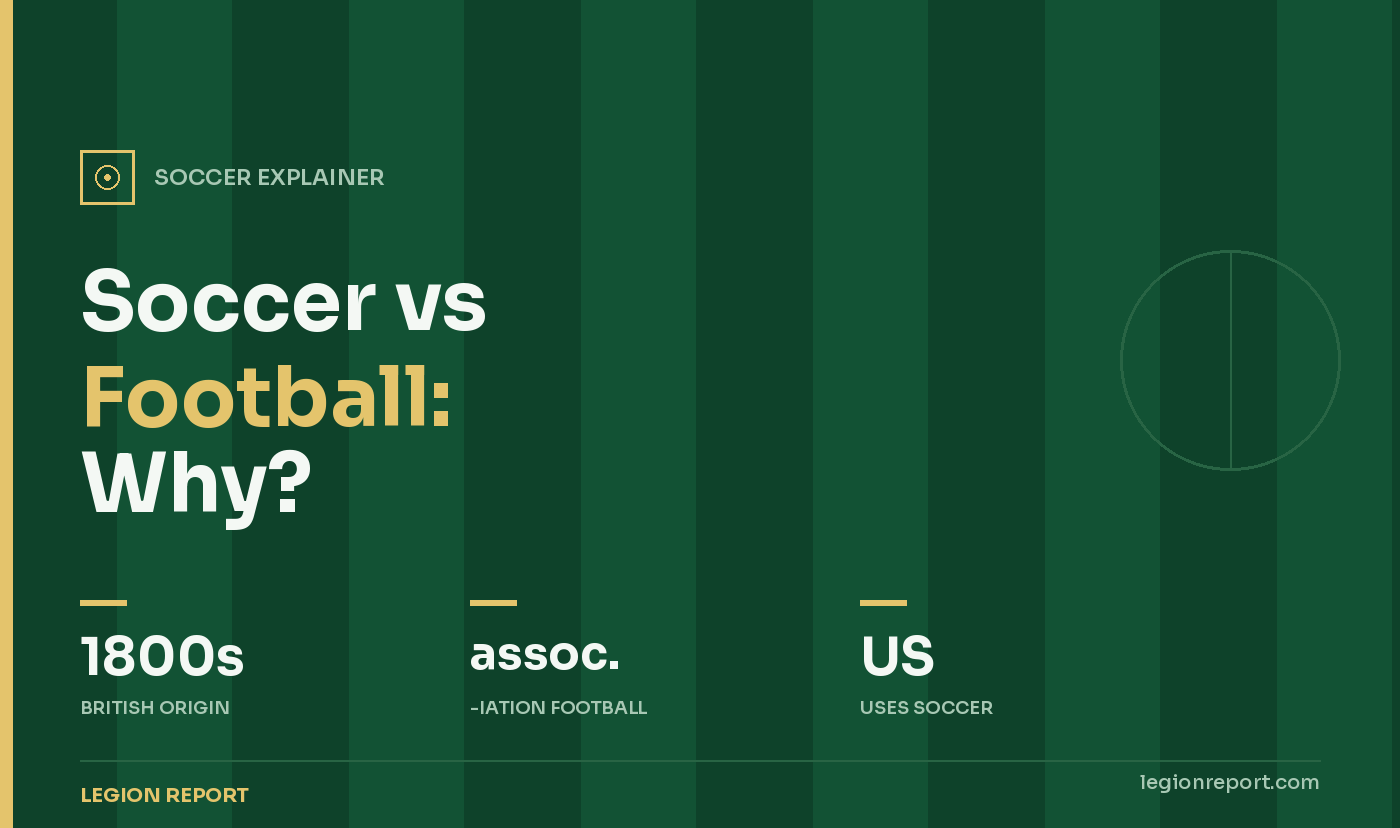
The chart below breaks down the origins of both names and which countries use which. Take a look, then we’ll get into the story.
The surprising origin of “soccer”
The single most surprising fact in this debate is that the word “soccer” is British, not American. It was coined in England in the 1880s, reportedly at Oxford University, as a piece of slang. In that era, students had a habit of taking a word, shortening it, and adding an “-er” ending. They turned “rugby football” into “rugger,” and they turned “association football” into “soccer,” taking the “soc” from the middle of “association.”
This means both “football” and “soccer” originated in Britain and were used there interchangeably for a long time. So when people argue that Americans “invented” the word soccer or are “wrong” to use it, the history says otherwise: they are using a perfectly authentic British term. The word simply traveled abroad and stuck in places where the home of the game eventually moved away from it.
Why there were two names to begin with
The need for distinct names arose in 19th-century Britain, when football was being codified into organized sports. Different schools and clubs played wildly different versions of “football,” so rules had to be standardized. In 1863, The Football Association was formed in England to govern one particular code, which became known formally as “association football” to distinguish it from the other major code, “rugby football.”
So from early on, there were two main types of football: association football and rugby football. The slang terms “soccer” (for association) and “rugger” (for rugby) emerged to tell them apart quickly. “Football” on its own remained the broad, popular name, and in most of the world, the association game became so dominant that it simply claimed the word “football” for itself.
Why some countries say soccer and others football
The reason different countries use different words comes down to one simple question: does that country already have another popular sport it calls “football”? In England, South America, most of Europe, Africa, and Asia, association football is by far the biggest sport, so it is just called “football,” with no ambiguity. There is no other game competing for the name.
But in a handful of countries, another sport got there first or grew alongside it. The United States has American football (gridiron), Australia has Australian rules football, Ireland has Gaelic football, and Canada has its own gridiron game. In these places, calling the association game “soccer” was the practical way to avoid confusion with the local sport already known as football. It was a matter of clarity, not ignorance.
How “soccer” faded in Britain
For much of the 20th century, “soccer” was used quite commonly in Britain alongside “football,” appearing in newspapers, magazines, and even the names of TV shows. The two words coexisted without much fuss. The shift happened more recently: as the word “soccer” became strongly associated with the United States and its growing version of the sport, British usage of “soccer” declined, and “football” became the firmly preferred term.
In a sense, Britain abandoned a word it had created precisely because it came to feel foreign. This is why the modern perception, that “football” is the authentic name and “soccer” is an American invention, is actually backwards. Both are British in origin; the difference today is just a matter of regional preference and which sport a country calls football. Crucially, both words refer to exactly the same game.
Final Word
The soccer-versus-football debate has a clear and slightly surprising answer: both words are British in origin, with “soccer” coined in 1880s England as slang for “association football.” The reason countries differ is simply whether they already have another sport called football, the United States, Canada, Australia, and Ireland adopted “soccer” for clarity, while most of the world just says “football.”
So neither term is wrong, and the next time the debate comes up, you can settle it with the history: the same beautiful game, two equally legitimate names. For more on the global game, see our explainer on what FIFA is and who runs the World Cup.